
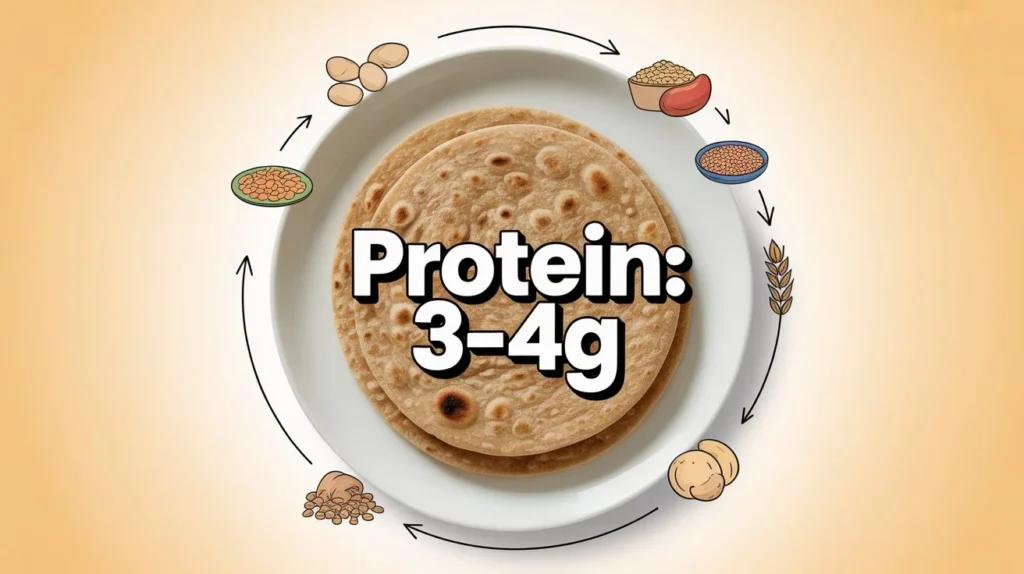
Roti, also known as chapati, is one of the most commonly eaten staple foods in many Indian households. Made primarily from whole wheat flour and cooked on a hot griddle, roti is a regular part of daily meals and is usually served with vegetables, dal, paneer, or different types of curries. For millions of people across India and other South Asian countries, roti is not just a food item but an important part of traditional eating habits and balanced meals.
Because roti is eaten almost every day, many people are curious about its nutritional value, especially its protein content. In recent years, awareness about healthy eating and balanced nutrition has increased significantly. People who are trying to maintain a healthy lifestyle, lose weight, or build muscle often pay close attention to the amount of protein they consume daily.
Protein is an essential nutrient that the body needs for many important functions. It helps build and repair muscles, supports the immune system, aids in tissue repair, and contributes to overall growth and development. A proper intake of protein is especially important for active individuals, growing children, and people who are trying to maintain strong muscles and healthy body functions.
How Much Protein Is in 1 Roti?
The protein content of a roti mainly depends on the type of flour used and the size of the roti. A typical medium-sized roti made from about 30–40 grams of whole wheat flour generally contains around 2.5 to 3 grams of protein.
If someone eats two rotis in a meal, the protein intake increases to approximately 5–6 grams. Similarly, three rotis can provide about 7.5–9 grams of protein. Although roti contributes to daily protein intake, it is primarily known as a carbohydrate-rich food that provides energy for the body.
Nutritional Value of 1 Roti
Apart from protein, roti contains several important nutrients that support overall health. A single medium-sized wheat roti typically contains around 70–100 calories. It also includes carbohydrates that provide energy for daily activities.
Whole wheat roti is also a good source of dietary fiber, which helps improve digestion and supports gut health. In addition, it contains essential nutrients such as B vitamins, iron, and magnesium. These nutrients play a role in metabolism, blood health, and maintaining proper body functions.
Because of these nutrients, roti remains an important part of a balanced Indian diet.
Does the Type of Flour Affect Protein Content?
The type of flour used to prepare roti can significantly influence its protein content. Different grains and flours contain different levels of protein, which means the nutritional value of roti can vary depending on the ingredients.
Whole Wheat Roti
Whole wheat roti is the most common type of roti consumed in Indian households. It provides a moderate amount of protein, typically around 2.5–3 grams per roti, along with a good amount of fiber.
Multigrain Roti
Multigrain roti is made using a mixture of different grains such as oats, barley, millet, or maize. Because of the variety of grains used, this type of roti often contains slightly more protein and fiber compared to regular wheat roti.
Besan Roti
Besan roti is prepared using gram flour made from chickpeas. Chickpeas are naturally high in protein, which makes besan roti a better option for those looking to increase their protein intake.
Soya Flour Roti
Soya flour is known for its very high protein content. When soy flour is mixed with wheat flour to make roti, the protein content of the roti increases significantly, making it a healthier option for people focusing on high-protein diets.
How to Increase Protein in Your Roti
There are several simple ways to increase the protein content of roti without making major changes to your daily diet. One effective method is mixing wheat flour with other protein-rich flours such as soy flour, gram flour, or millet flour. This combination improves the overall nutritional value of the roti.
Another way to increase protein intake is by preparing stuffed rotis using ingredients like paneer, soy granules, or sprouted lentils. These ingredients naturally contain higher amounts of protein and can turn a simple roti into a more nutritious meal.
Pairing roti with protein-rich foods is also an excellent strategy. When roti is eaten with foods such as dal, yogurt, eggs, chickpeas, or paneer, the meal becomes more balanced and provides sufficient protein for the body.
Protein in Roti Compared to Other Indian Foods
Roti provides a moderate amount of protein compared to other common foods. For example, one egg typically contains around 6 grams of protein, which is about twice the protein found in a single roti.
Similarly, a cup of cooked dal can provide around 7–9 grams of protein, while 100 grams of paneer can offer approximately 18 grams of protein. These comparisons show that while roti contributes to daily protein intake, it works best when combined with other protein-rich foods.
Is Roti a Good Protein Source?
Roti can be considered a moderate source of protein, but it should not be relied upon as the primary protein source in a diet. Its main role in a meal is to provide carbohydrates that supply energy to the body.
However, when roti is eaten together with foods such as dal, paneer, lentils, or yogurt, it becomes part of a balanced meal that provides both energy and sufficient protein. This combination is common in traditional Indian meals and helps maintain proper nutrition.
How Many Rotis Should You Eat for Protein?
The number of rotis a person should eat depends on their individual nutritional needs, activity level, and health goals. For people trying to lose weight, eating one to two rotis per meal along with vegetables and protein-rich foods is often recommended.
Individuals focusing on muscle gain or higher energy requirements may consume three to four rotis with additional protein sources such as paneer, eggs, or lentils. For a regular diet, most adults typically eat two to three rotis per meal.
Regardless of the number of rotis consumed, it is important to include a variety of protein-rich foods in the diet to meet daily protein requirements.
Conclusion
Roti is a staple food that plays an important role in many daily diets. On average, one medium-sized roti contains about 2.5–3 grams of protein along with carbohydrates, fiber, and essential nutrients.
Although roti provides some protein, it is not considered a high-protein food on its own. To make meals more nutritious, it is best to combine roti with protein-rich foods such as dal, paneer, yogurt, eggs, or lentils. Using multigrain flour or mixing soy flour with wheat flour can also help increase the protein content of rotis.
Frequently Asked Questions (FAQs)
How much protein is in 1 wheat roti?
One medium-sized wheat roti made from whole wheat flour usually contains about 2.5 to 3 grams of protein. The exact amount can vary depending on the size of the roti and the quantity of flour used.
How much protein is in 2 rotis?
Two medium-sized rotis typically provide around 5 to 6 grams of protein. Eating rotis with protein-rich foods like dal, paneer, or curd can further increase the total protein in your meal.
Is roti a good source of protein?
Roti contains a moderate amount of protein but it is mainly a source of carbohydrates and energy. It becomes a more balanced and protein-rich meal when eaten with foods such as lentils, yogurt, paneer, or eggs.
Does multigrain roti contain more protein than wheat roti?
Yes, multigrain roti often contains slightly more protein because it is made using a mix of grains like oats, millet, and barley. These grains add extra nutrients and improve the overall nutritional value.
How can I increase the protein content in roti?
You can increase the protein content by mixing wheat flour with soy flour, gram flour (besan), or other high-protein flours. Another effective way is to eat roti with protein-rich foods like dal, paneer, chickpeas, or yogurt.