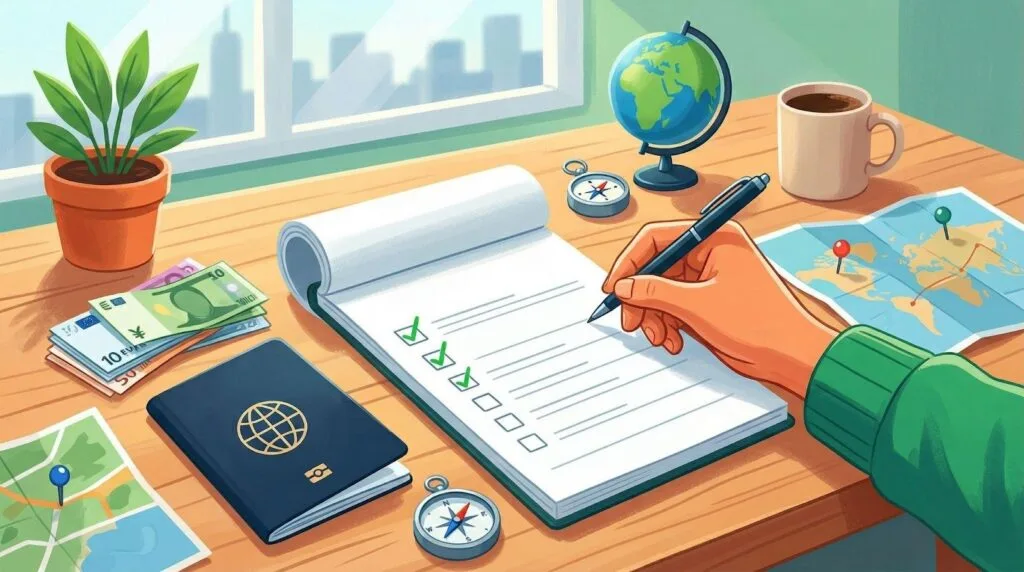
Planning your first international trip is a whirlwind of excitement. Between scrolling through stunning destination photos and mapping out your itinerary, there is a sense of adventure that is hard to match. However, as the departure date draws closer, the practicalities of travel begin to take centre stage; specifically, how you intend to pay for your experiences. In the past, the primary concern was where to buy forex in cash, leading many to spend hours hunting for the best rates at physical exchange bureaus. Today, the situation has changed. The modern traveller relies on technology to manage their funds, making the choice of a travel card one of the most important decisions in the pre-trip phase.
If you are exploring the world of international finance for the first time, you might feel overwhelmed by the options. From traditional bank offerings to new-age fintech solutions, the market is crowded. Understanding how to apply for forex card accounts and identifying the features that actually save you money is essential for a stress-free journey. This guide simplifies the process, helping you move away from old-school cash handling toward a more secure, digital-first experience.
The evolution of travel money: From cash to cards
Historically, an Indian traveller’s first stop was a local money changer to buy forex in physical notes. While having some cash is necessary for small tips or local markets, carrying large sums is risky and often expensive due to high exchange rate margins. The introduction of the travel card offered a safer alternative, allowing users to load a specific currency and swipe it like a debit card abroad.
However, even these traditional prepaid cards have their limitations. Many require you to visit a branch, fill out extensive paperwork, and wait days for activation. Furthermore, the “buy-back” rates, the price you get when you return and want to convert your leftover currency back to Rupees, are often significantly lower, leading to a hidden loss of value. This is why more travellers are now looking for zero forex markup cards that offer transparency and ease of use.
How to apply for a forex card: The traditional vs. modern route
When researching how to apply for forex card solutions, you will find two distinct paths.
The traditional bank route
Most nationalised and private banks offer travel cards. The process usually involves:
- Visiting a branch or filling out a lengthy online form.
- Submitting physical copies of your Passport, PAN card, and sometimes your flight tickets or Visa.
- Waiting for the bank to verify your documents and issue the physical plastic.
- Paying an issuance fee and a loading fee every time you add money.
The modern digital route
Fintech innovation has completely reimagined this journey. You can now complete the entire process on your smartphone in minutes. The best part? You often have access to your funds immediately via a virtual card, even before the physical card arrives at your doorstep.
Why are zero forex markup cards a game-changer?
The highest cost of international spending isn’t the transaction fee; it is the exchange rate markup. Most standard cards add a 3% to 5% margin on top of the actual exchange rate. If you spend ₹2,00,000 on your trip, a 3.5% markup means you’ve paid ₹7,000 just in hidden fees.
By choosing zero forex markup cards, you ensure that you are paying the closest possible market rate (or the VISA/Mastercard rate) without any added bank commission. This transparency allows you to stretch your travel budget further, ensuring that every Rupee you spend goes toward your memories rather than bank profits. When you use zero forex markup cards, you are effectively choosing the most cost-effective way to explore the world.
Manage travel funds with Niyo smartly
For those looking for the most efficient way to travel smartly and manage international spending, Niyo has emerged as the industry leader. Let us see what it can do for you:
100% digital onboarding
The Niyo app ensures a seamless account opening process through 100% digital onboarding and Video KYC. You don’t need to rush to a bank; you can open your account from your comfort zone. You instantly receive a unique account number and IFSC, and a virtual VISA card is issued immediately. This allows you to start booking international flights or paying university fees online, the very same day.
Rapid delivery with Niyo Express
Niyo understands that sometimes travel plans are last-minute. While physical cards are typically delivered within 3 to 5 business days, Niyo Express offers 1-day delivery in metro cities like Bangalore, Delhi, Hyderabad, Mumbai, and Pune.
Apart from the above two, one of Niyo’s most innovative features is its structure. Unlike traditional cards, where you have to decide how much foreign currency to “load” into a bucket, Niyo is an INR-based account.
- Zero loading fees: You can load your account in Indian Rupees via UPI, IMPS, or NEFT 24/7 without any charges.
- Real-time conversion: When you swipe your card in a foreign country, Niyo converts your INR to the local currency at the live VISA exchange rate with zero forex markup.
- No unloading hassle: When you return home, your money is already in INR. There is no need to “sell back” currency at a loss; you can simply use the balance for your domestic spending in India.
Conclusion
Getting your first travel card shouldn’t be a bureaucratic hurdle. By choosing to move away from the traditional ways to buy forex and embracing the digital-first approach of Niyo, you gain financial power.
With 100% digital onboarding, zero forex markup, and the flexibility of an INR-based account, Niyo ensures that your only focus is the adventure ahead. Stop worrying about how to apply for forex card solutions at banks and start your journey with the most advanced travel banking technology in your pocket. With Niyo Zero Forex Markup cards, load your account in INR, pack your bags, and experience the world with absolute transparency and ease.