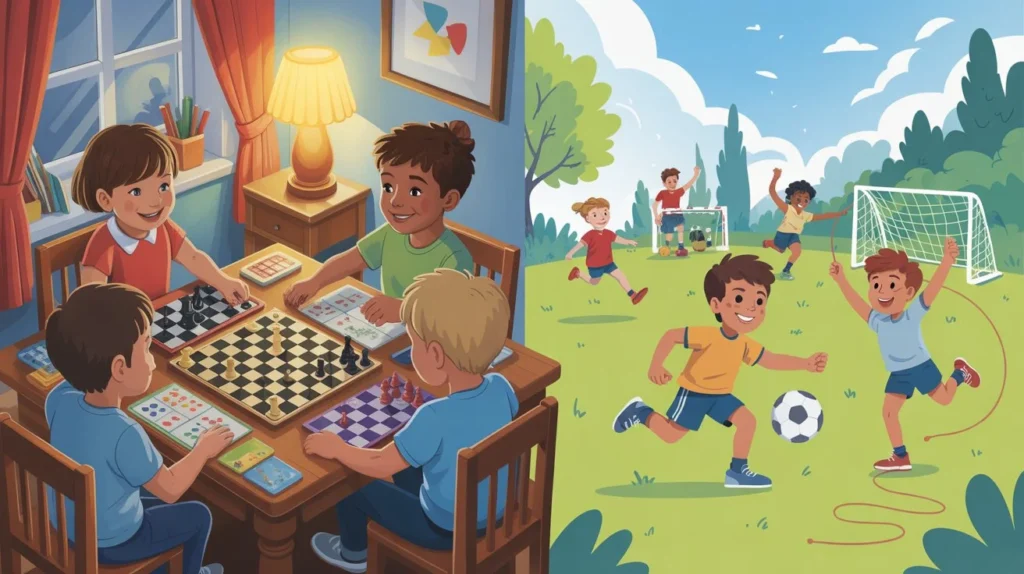
Gaming both indoor and outdoor isn’t just about competition; it’s about connection, creativity, and pure fun. From immersive digital worlds and classic table games to adrenaline-pumping sports and backyard challenges, the world of games offers something for everyone, no matter your age or skill level.
indoor games provide a cozy escape perfect for sharpening the mind, building teamwork, and enjoying quality time with friends and family. On the other hand, outdoor games get us moving, breathing fresh air, and embracing the thrill of physical activity. Together, they create a balanced mix of entertainment and well-being.
Understanding Indoor Games
Indoor games are activities played within enclosed spaces such as homes, schools, clubs, or gaming centers. These games generally focus more on mental engagement than physical movement. They encourage concentration, creativity, logical thinking, and strategic planning.
One of the main reasons indoor games are so popular is their accessibility. They can be played regardless of weather conditions, making them suitable for all seasons. Whether it is raining outside or extremely hot, indoor gaming remains a reliable source of enjoyment.
In the broader discussion of Indoor and Outdoor Games, indoor games represent the intellectual and strategic side of gaming. They challenge the brain, improve focus, and promote thoughtful decision-making.
Types of Indoor Games
Board Games
Board games have been played for centuries and remain a favorite activity for families and friends. Games such as chess, Ludo, and Monopoly require players to think strategically and plan ahead. These games are not only entertaining but also educational.
Chess, for example, enhances critical thinking and problem-solving skills. Monopoly teaches financial management and negotiation. Ludo promotes patience and friendly competition. Board games encourage face-to-face interaction, helping players strengthen relationships and communication skills.
Within Indoor and Outdoor Games , board games stand out as timeless tools for mental development and social bonding.
Card Games
Card games are simple yet highly engaging. Popular games like UNO, Poker, and Rummy are played across cultures and generations. These games improve memory, quick thinking, and the ability to make decisions under pressure.
Card games are often played during family gatherings or social events because they require minimal equipment and can accommodate different numbers of players. They encourage healthy competition and sharpen analytical skills.
Video Games
Video games have transformed indoor gaming in the modern era. With consoles, personal computers, and smartphones, players can access thousands of digital games covering various genres such as action, adventure, sports simulation, puzzle-solving, and educational content.
Online multiplayer games connect players worldwide, promoting teamwork and communication. Many video games improve hand-eye coordination, reaction time, and problem-solving abilities. However, moderation is essential to prevent excessive screen time, which can impact physical health and social interaction.
In the context of Indoor and Outdoor Games , video games represent the technological advancement of indoor entertainment, combining creativity, storytelling, and interactive learning.
Puzzle and Brain Games
Puzzle games such as Sudoku, crosswords, and jigsaw puzzles stimulate the brain and enhance logical reasoning. These games are suitable for all age groups and are particularly effective in improving concentration and memory.
Brain games also help reduce stress by allowing individuals to focus on problem-solving tasks. They are widely recommended for maintaining mental sharpness and cognitive flexibility.
Benefits of Indoor Games
Indoor games offer numerous benefits beyond simple entertainment. They improve concentration and analytical thinking, which are essential skills in academics and professional life. Many indoor games encourage patience and discipline, as players must follow rules and wait for their turn.
Indoor gaming also strengthens family bonds. Sitting together to play a board or card game fosters communication and shared experiences. Additionally, indoor games provide a safe environment, especially for young children.
When discussing Indoor and Outdoor Games , it is important to recognize how indoor activities nurture intellectual growth and emotional connection.
Understanding Outdoor Games
Outdoor games are played in open spaces such as parks, playgrounds, sports fields, and courts. These games involve physical movement and often require teamwork or individual athletic effort.
Outdoor games are essential for maintaining physical fitness. They allow individuals to run, jump, stretch, and engage in dynamic activities that strengthen muscles and improve stamina. In an age where sedentary lifestyles are common, outdoor games provide a necessary balance.
Outdoor gaming also promotes social interaction on a larger scale. Players learn cooperation, leadership, and communication while participating in team activities.
In the larger picture of Indoor and Outdoor Games , outdoor activities represent physical vitality and active engagement with the environment.
Types of Outdoor Games
Team Sports
Team sports such as football, cricket, and basketball are widely played around the world. These games require coordination and collaboration among team members. Success depends on communication, strategy, and mutual support.
Team sports teach discipline, responsibility, and leadership. Players learn to work together toward a shared goal, developing trust and camaraderie. Winning and losing both provide valuable life lessons about resilience and sportsmanship.
Individual Sports
Individual outdoor sports include activities like tennis, running, cycling, and swimming. These sports focus on personal achievement and self-improvement.
Participants in individual sports learn self-discipline and goal-setting. They push their limits and strive to improve their performance. Such activities build confidence and encourage independence.
Recreational Outdoor Games
Recreational games such as tag, hide and seek, and tug of war are enjoyed by people of all ages. These games focus primarily on fun and participation rather than competition.
Recreational outdoor activities encourage laughter, creativity, and social bonding. They require minimal equipment and can be played almost anywhere, making them accessible to everyone.
Benefits of Outdoor Games
Outdoor games significantly improve physical health. They strengthen muscles and bones, enhance cardiovascular fitness, and improve coordination. Regular physical activity reduces the risk of obesity and lifestyle-related diseases.
Spending time outdoors also has positive effects on mental health. Exposure to sunlight helps the body produce vitamin D, which supports overall well-being. Outdoor gaming reduces stress and improves mood.
Socially, outdoor games build teamwork and leadership skills. Players learn how to communicate effectively and handle competitive situations gracefully.
Within the framework of Indoor and Outdoor Games , outdoor activities play a crucial role in promoting physical vitality and emotional resilience.
Comparing Indoor and Outdoor Games
Indoor and outdoor games differ in several important aspects. Indoor games generally require limited space and focus on mental skills. Outdoor games, on the other hand, require larger areas and emphasize physical activity.
Indoor gaming is not affected by weather conditions, while outdoor gaming depends on suitable weather. Indoor games often involve smaller groups, whereas outdoor games frequently include larger teams.
Despite these differences, both forms of gaming contribute to overall development. Indoor games sharpen the mind, while outdoor games strengthen the body. Together, they create a balanced approach to recreation and growth.
The Importance of Balance in Indoor and Outdoor Games
A healthy lifestyle includes both mental and physical activities. Focusing solely on indoor games, especially digital ones, can lead to a sedentary lifestyle. On the other hand, concentrating only on outdoor games may limit opportunities to develop strategic thinking skills.
Balancing Indoor and Outdoor Games ensures comprehensive development. For example, a child might play football in the afternoon and solve puzzles in the evening. An adult might participate in weekend sports while enjoying board games with family during the week.
This balance supports academic performance, professional productivity, and overall well-being. It encourages individuals to develop diverse skills that benefit them throughout life.
The Role of Gaming in Child Development
Gaming plays a significant role in childhood development. Indoor games enhance cognitive skills, creativity, and patience. Outdoor games support physical growth, coordination, and teamwork.
Children who engage in both forms of gaming are more likely to develop confidence and social skills. They learn to solve problems, cooperate with peers, and handle challenges effectively.
Parents and educators should encourage balanced participation in Indoor and Outdoor Games to ensure holistic growth.
Gaming for Adults and Families
Gaming is not limited to children. Adults also benefit greatly from both indoor and outdoor games. Indoor games help relieve stress after long work hours, while outdoor sports provide physical exercise and mental relaxation.
Family gaming sessions create lasting memories and strengthen relationships. Whether playing a board game at home or organizing a friendly outdoor match, shared activities promote unity and understanding.
Conclusion
Indoor and Outdoor Games are essential components of a healthy and fulfilling life. Indoor games nurture the mind by enhancing concentration, creativity, and strategic thinking. Outdoor games strengthen the body, build stamina, and encourage teamwork.
Rather than choosing one over the other, individuals should aim for balance. Combining intellectual challenges with physical activity leads to well-rounded development and long-term well-being.
Gaming is more than just entertainment. It is a powerful tool for growth, connection, and happiness. By embracing both indoor and outdoor games, we can enjoy a lifestyle that is active, engaging, and enriching in every sense.
FAQs
1. What are Indoor and Outdoor Games ?
Indoor and Outdoor Games include all types of games played inside homes or buildings and outside in open spaces. Indoor games focus on mental skills, while outdoor games focus on physical activity.
2. Which is better, indoor or outdoor games?
Both are important. Indoor games improve thinking skills, and outdoor games improve physical fitness. A balance of both is best.
3. How do indoor games help?
Indoor games improve concentration, memory, and problem-solving skills. They also help reduce stress.
4. Why are outdoor games important?
Outdoor games improve strength, stamina, and teamwork skills. They also keep the body active and healthy.
5. How can we balance both types of games?
Set time for both mental and physical activities. Play outdoor games regularly and enjoy indoor games in moderation.