How much protein in 100 grams chana? It is a question that comes up frequently among people who want to eat healthier, build muscle, manage weight, or increase their daily protein intake without relying entirely on animal-based foods. Chana, also known as chickpeas, has been a staple ingredient in many households for generations because it is affordable, versatile, and packed with essential nutrients.
Protein is one of the most important nutrients required by the body. It supports muscle growth, tissue repair, hormone production, enzyme function, and immune health. While foods such as eggs, chicken, and dairy products are well-known sources of protein, chana has earned recognition as one of the best plant-based alternatives. Whether it is consumed boiled, roasted, soaked, or cooked into curries, chana contributes valuable protein along with dietary fiber, complex carbohydrates, vitamins, and minerals.
One important point to understand is that the protein content changes depending on how chana is prepared. Raw dried chana contains significantly more protein per 100 grams than boiled chana because cooking increases its weight by absorbing water. This often creates confusion among people tracking their protein intake.
How Much Protein in 100 Grams Chana?
The amount of protein in chana depends on whether you are measuring it in its raw, cooked, roasted, or processed form.
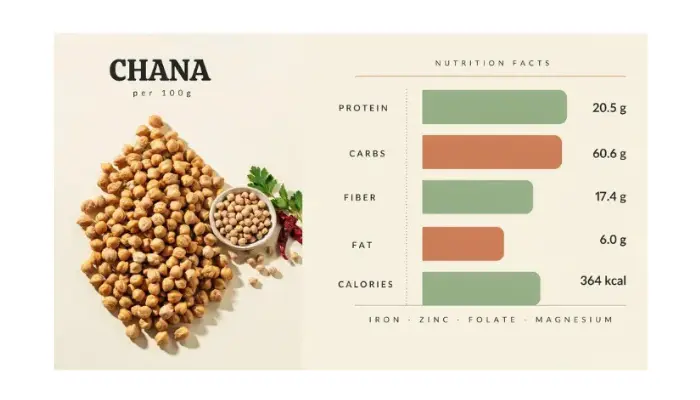
Raw dried chana contains approximately 20 to 21 grams of protein per 100 grams. Because dried chickpeas contain very little moisture, the nutrients remain concentrated. This makes raw chana one of the richest plant-based protein sources available.
After cooking, the nutritional concentration changes. During boiling, chickpeas absorb a large amount of water and become much heavier. Although the total protein remains almost the same, the weight increases considerably. As a result, 100 grams of boiled chana contains around 8 to 9 grams of protein.
Roasted chana retains a much higher protein concentration because most of its moisture has been removed during the roasting process. One hundred grams of roasted chana generally provides around 20 to 22 grams of protein, making it one of the healthiest high-protein snacks.
Understanding this difference helps avoid confusion when comparing nutritional labels and planning a balanced diet.
Why Chana Is Considered a Healthy Protein Source
Protein is essential for almost every function in the human body, but chana offers much more than protein alone. Unlike many processed protein products, it naturally contains dietary fiber, vitamins, minerals, antioxidants, and slow-digesting carbohydrates.
The combination of protein and fiber makes chana particularly satisfying. Meals prepared with chickpeas help people stay full for longer periods, reducing the temptation to snack frequently. This is one reason why nutritionists often recommend chickpeas for people trying to manage their body weight.
Another reason chana is highly valued is its affordability. Compared to many animal-based protein sources and commercial protein supplements, chickpeas are inexpensive and widely available. This makes them accessible to families with different budgets while still providing excellent nutritional value.
Because chana is naturally free from cholesterol and relatively low in saturated fat, it also fits well into heart-conscious eating patterns.
Also Read – Protein in Roti
Nutritional Value of 100 Grams of Raw Chana
Protein is only one part of chana’s impressive nutritional profile. Every serving contains nutrients that contribute to overall health and well-being.
One hundred grams of raw dried chana provides approximately 364 calories, making it an energy-rich food suitable for active individuals. Along with its 20 to 21 grams of protein, it contains about 61 grams of carbohydrates, most of which are complex carbohydrates that digest slowly and provide lasting energy.
The fiber content is equally impressive, reaching nearly 17 grams per 100 grams. This fiber supports healthy digestion and helps regulate appetite throughout the day.
Raw chana also contains healthy fats in small amounts, along with important minerals such as iron, magnesium, phosphorus, potassium, calcium, and zinc. It is particularly rich in folate, a vitamin that supports healthy cell growth and plays an important role during pregnancy.
Together, these nutrients make chana much more than simply a protein-rich food. It provides a balanced combination of nutrients that support multiple aspects of health.
Protein Content in Different Types of Chana
The way chickpeas are prepared has a noticeable effect on their nutritional values. While the total amount of protein remains largely unchanged, the concentration per 100 grams varies because of changes in water content.
Protein in Raw Chana
Raw dried chana contains the highest protein concentration because almost all moisture has been removed. One hundred grams provides approximately 20 to 21 grams of protein, making it one of the richest legumes available.
Raw chickpeas require soaking before cooking, which improves their texture and makes them easier to digest. Although they are not eaten in their raw dried form, these nutritional values are commonly used on food labels and packaging.
Protein in Boiled Chana
Boiled chickpeas remain one of the healthiest ways to consume chana. After soaking and cooking, they become soft and absorb a significant amount of water. Because of this increase in weight, 100 grams of boiled chana contains approximately 8 to 9 grams of protein.
Many people mistakenly assume that cooking destroys protein, but this is not the case. The protein remains largely intact. The lower value simply reflects the increased water content rather than any major nutrient loss.
Boiled chana is commonly added to salads, curries, soups, rice dishes, and wraps, making it easy to include in everyday meals.
Protein in Roasted Chana
Roasted chana has become a favorite snack among fitness enthusiasts because it combines convenience with excellent nutritional value.
Roasting removes much of the remaining moisture while preserving the protein content. As a result, 100 grams of roasted chana contains approximately 20 to 22 grams of protein.
Besides protein, roasted chana also supplies fiber, iron, magnesium, and several B vitamins. It provides a satisfying crunch without the excessive oil, sugar, or preservatives commonly found in processed snacks.
Its long shelf life also makes roasted chana a practical option for people who need healthy snacks during work, travel, or busy schedules.
Protein in Black Chana
Black chana, often called kala chana, is another highly nutritious variety. Although slightly different in appearance and taste, its protein content is very similar to regular chickpeas.
Raw black chana contains around 20 grams of protein per 100 grams, while boiled black chana provides approximately 8 to 9 grams per 100 grams.
Many nutrition experts appreciate black chana for its higher antioxidant content, which supports overall health while delivering the same valuable plant protein.
Protein in Chana Dal
Chana dal is prepared by splitting and polishing chickpeas, creating a popular ingredient used in numerous traditional dishes.
Because it is usually measured in its dry form, chana dal contains approximately 22 to 24 grams of protein per 100 grams. It cooks more quickly than whole chickpeas while retaining much of the same nutritional value.
Its mild flavor and creamy texture make it suitable for soups, dals, stews, and various savory recipes.
Is Chana a Complete Protein?
Many people wonder whether chana alone provides every amino acid needed by the body.
Protein is made up of amino acids, nine of which are considered essential because the human body cannot produce them on its own. Chana contains all of these essential amino acids, but one of them, methionine, is present in relatively smaller amounts.
For this reason, chickpeas are generally classified as an incomplete protein rather than a complete one. However, this should not discourage anyone from including them in their diet. The solution is remarkably simple.
Combining chana with grains such as rice, wheat, oats, millet, or quinoa creates a more balanced amino acid profile. Traditional meals like chana with rice or chapati naturally complement each other, providing protein quality comparable to that of complete protein sources.
This is one reason why many traditional diets around the world have paired legumes with grains for centuries.
Why Vegetarians Depend on Chana
For individuals who do not consume meat, fish, or poultry, meeting daily protein requirements requires careful food choices. Chana has become one of the most dependable ingredients because it offers a substantial amount of protein while remaining affordable and widely available.
Unlike many processed meat alternatives, chickpeas are minimally processed and contain naturally occurring nutrients. They contribute not only protein but also iron, fiber, potassium, magnesium, and folate, making them suitable for maintaining overall nutritional balance.
Vegetarians often combine chickpeas with dairy products, whole grains, nuts, and seeds throughout the day to create meals that supply a broad range of amino acids. This approach supports muscle maintenance, energy production, and overall health without relying on animal protein.
How Protein From Chana Supports Muscle Health
Protein plays a central role in maintaining muscle tissue. Every workout creates tiny muscle fibers that need protein to repair and become stronger. Without sufficient dietary protein, muscle recovery becomes slower, and long-term progress may be affected.
Chana contributes meaningfully to daily protein intake while also supplying carbohydrates that replenish glycogen stores after physical activity. This combination makes it useful for people who engage in strength training, endurance sports, or regular exercise.
Although chickpeas alone may not contain the same amino acid profile as animal proteins, consuming them as part of a balanced diet provides valuable nutritional support for muscle maintenance and recovery.
Health Benefits of Eating Chana Regularly
The nutritional value of chana extends well beyond its protein content. Regular consumption can support several aspects of overall health because it combines protein, dietary fiber, vitamins, minerals, and antioxidants in a single food. Unlike highly processed snacks or refined carbohydrates, chana provides nutrients that are slowly digested and gradually absorbed by the body. This steady release of energy helps maintain consistent energy levels throughout the day while supporting long-term health.
Supports Healthy Digestion
One of the biggest advantages of chana is its high fiber content. Fiber adds bulk to food, helping it move efficiently through the digestive system. Regular intake may reduce constipation, improve bowel regularity, and support a healthy gut microbiome.
Healthy digestion also influences nutrient absorption. When digestion functions properly, the body is better able to utilize the protein, vitamins, and minerals found in foods like chana. Because of this, many nutritionists recommend including legumes in a balanced diet several times each week.
Helps Maintain Heart Health
Heart health is another area where chana offers several benefits. It contains very little saturated fat and no cholesterol while providing potassium and magnesium, minerals that contribute to normal blood pressure regulation.
Its fiber content may also help maintain healthy cholesterol levels when consumed as part of a balanced eating pattern. Replacing highly processed foods with legumes like chana can contribute to better cardiovascular health over time.
Supports Healthy Blood Sugar Levels
Chana has a relatively low glycemic index compared to many refined carbohydrate foods. Since it digests slowly, glucose enters the bloodstream more gradually instead of causing rapid spikes in blood sugar.
The combination of protein, complex carbohydrates, and fiber makes it a practical food choice for individuals who want steady energy throughout the day. It also helps reduce sudden hunger that often follows meals made primarily from refined carbohydrates.
Can Chana Help With Weight Loss?
Many people trying to lose weight include chana in their meal plans because it provides lasting satiety without requiring expensive supplements or highly restrictive diets.
Protein and Fiber Work Together
Protein slows digestion and helps preserve muscle mass during calorie-controlled diets. Fiber adds volume to meals, allowing people to feel satisfied after eating moderate portions.
Together, these nutrients reduce frequent cravings and unnecessary snacking between meals. This does not mean chana alone causes weight loss, but it can make maintaining a calorie deficit easier when combined with regular exercise and balanced nutrition.
A Filling Yet Nutritious Food
Boiled chana is particularly useful because it contains fewer calories per 100 grams than dried chana due to its higher water content. A bowl of boiled chickpeas can provide satisfying nutrition while fitting comfortably into many healthy eating plans.
Instead of replacing entire meals with protein shakes or processed diet foods, many people simply add chana to salads, soups, or homemade meals to increase both protein and fullness.
Is Chana Good for Muscle Building?
People who exercise regularly often ask whether plant-based protein is sufficient for muscle development. Chana can certainly contribute to muscle growth when consumed as part of an overall protein-rich diet.
Supports Recovery After Exercise
Exercise places stress on muscle fibers, creating microscopic damage that requires protein for repair. Chana supplies protein along with carbohydrates, making it useful after physical activity because carbohydrates help restore muscle glycogen while protein supports recovery.
Best Combined With Other Protein Sources
Although chana provides valuable protein, combining it with dairy products, eggs, soy foods, or grains creates a more balanced amino acid intake throughout the day. This approach allows vegetarians and vegans to comfortably meet their protein requirements without depending on a single food source.
How Chana Compares With Other Protein Foods
Protein quality is often discussed by comparing foods on a per-100-gram basis. While animal foods generally contain complete protein, chana remains one of the strongest plant-based options.
One hundred grams of raw chana contains roughly 20 to 21 grams of protein, placing it close to many legumes and considerably above most grains. Boiled chana contains less protein per 100 grams because cooking increases water content rather than reducing the protein itself.
Compared with lentils, kidney beans, and peas, chickpeas offer similar protein levels while providing an excellent balance of fiber and minerals. Although chicken breast and eggs contain higher-quality complete protein, chana remains an outstanding choice for people seeking affordable plant-based nutrition.
Best Ways to Eat Chana
There are numerous ways to include chana in everyday meals. Different preparation methods offer slightly different nutritional profiles while maintaining its overall health benefits.
Boiled Chana
Boiled chickpeas are among the healthiest options because they require minimal added fat. They can be mixed into vegetable salads, rice dishes, soups, or curries.
Roasted Chana
Roasted chana makes a convenient snack that travels well and requires no refrigeration. Its higher protein concentration per 100 grams makes it especially appealing for people looking for nutritious alternatives to chips and processed snacks.
Soaked Black Chana
Many households soak black chana overnight before consuming it the next morning. Soaking softens the legumes and prepares them for cooking while making them easier to digest.
Chana Dal
Chana dal remains a staple ingredient in many traditional dishes. It cooks relatively quickly and pairs well with vegetables, spices, and whole grains to create balanced meals.
How Much Chana Should You Eat Daily?
There is no single serving size that applies to everyone because protein requirements depend on age, body weight, physical activity, and overall diet.
For many healthy adults, consuming approximately 50 to 100 grams of boiled chana as part of a meal is a practical serving. Individuals with higher protein requirements, such as athletes or those engaged in strength training, may choose larger portions while balancing their intake with other protein-rich foods.
Moderation remains important because excessive intake of any food may contribute unnecessary calories.
Common Myths About Chana Protein
Several misconceptions continue to circulate regarding the nutritional value of chickpeas.
One common myth claims that boiling destroys protein. In reality, cooking mainly increases the water content, reducing protein concentration per 100 grams rather than eliminating the protein itself.
Another misconception suggests that plant protein is ineffective for building muscle. While animal proteins naturally contain a complete amino acid profile, plant proteins still contribute significantly to daily protein intake when consumed through a varied diet.
Some people also believe roasted chana loses all its nutrients during processing. In fact, roasted chana continues to provide protein, fiber, iron, magnesium, and several vitamins, making it one of the healthier snack choices available.
Conclusion
How much protein in 100 grams chana? The answer depends on how it is prepared. Raw dried chana contains approximately 20 to 21 grams of protein per 100 grams, roasted chana provides around 20 to 22 grams, while boiled chana contains about 8 to 9 grams because of its higher water content.
Protein is only one reason chana deserves a place in a healthy diet. Its combination of fiber, complex carbohydrates, vitamins, and essential minerals makes it suitable for supporting muscle recovery, digestion, heart health, and long-lasting energy. Whether your goal is improving fitness, managing weight, or simply eating more nutritious foods, chana offers an affordable and practical plant-based protein source that can easily become part of everyday meals.
Frequently Asked Questions
Can chana replace animal protein completely?
Chana is an excellent plant-based source of protein, but it should not be the only protein source in your diet. Combining chana with foods such as rice, whole grains, dairy, soy, or nuts provides a more balanced amino acid profile and helps meet daily protein needs.
When is the best time to eat chana for protein?
Chana can be eaten at any time of the day. Many people prefer it as part of breakfast for sustained energy, as a midday snack in roasted form, or after exercise when paired with other protein-rich foods to support muscle recovery.
How does cooking affect the protein content of chana?
Cooking does not significantly reduce the total amount of protein in chana. During boiling, chickpeas absorb water and become heavier, so the protein per 100 grams decreases to around 8–9 grams. The protein remains largely intact; the lower value is due to increased moisture rather than nutrient loss.
Which type of chana contains the highest protein?
Raw dried chana and roasted chana contain the highest protein concentration, providing approximately 20–22 grams of protein per 100 grams. Boiled chana contains less protein per 100 grams because its water content increases during cooking.
Can I eat chana every day?
Yes. Most healthy individuals can include moderate portions of chana in a balanced diet unless advised otherwise by a healthcare professional due to specific medical conditions.